About this course
This course delves into the inner workings of programming languages by examining how they implement object-oriented concepts and other critical internals. Through detailed comparisons of languages such as Java, C++, Python, JavaScript, and C#, you'll learn why design choices differ and how these affect performance, reliability, and ease of development. Our approach encourages you to ask, “How could I have designed this feature myself?” while deepening your understanding of language internals.
Comments (0)
Definitions, scope, and importance of intrinsic design choices.
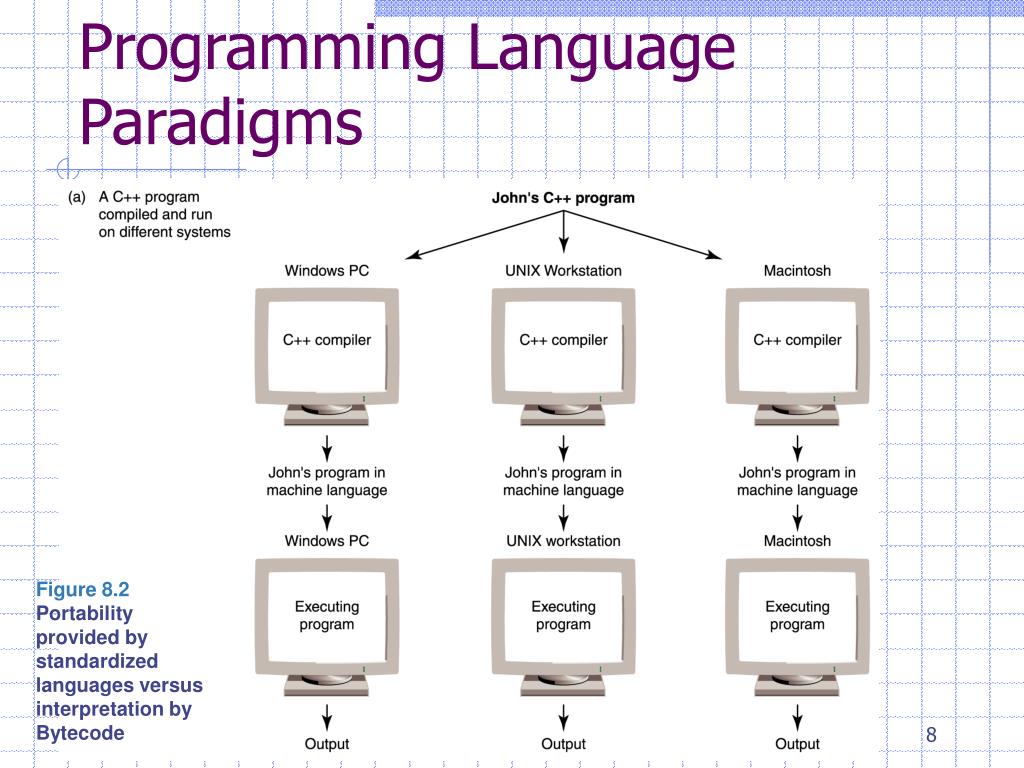
How compilers translate code and optimize performance.
Overview of runtime environments and their impact on execution.
How memory is organized and managed in different languages.
How the JVM supports classes and objects, and the basics of bytecode.
Implementation of inheritance, method overriding, and dynamic binding.
Heap organization and garbage collection algorithms.
How Java’s design affects speed and scalability.
How objects are organized in memory and how virtual functions work.
Constructors, destructors, and managing dynamic memory.
Achieving runtime polymorphism and its trade-offs.
How manual memory management influences performance.
How Python represents objects dynamically and manages types.
Understanding Python’s approach to memory management.
Advantages and limitations of Python's dynamic nature.
Analyze a real-world Python application leveraging OOP.
Understanding the prototype chain and its benefits.
How ES6 classes simplify object creation and inheritance.
Practical examples of object creation and method overriding.
Benefits and trade-offs of JavaScript’s approach vs. traditional OOP.
Introduction to classes, objects, and basic OOP in C#.
Explore properties, events, and delegates.
How LINQ integrates with OOP for data querying.
Review a real-world application built with C#'s OOP features.
Overview of key differences in OOP implementations.
How intrinsic design choices impact runtime performance.
Compare garbage collection, reference counting, and manual management.
Analyze real-world examples to understand design trade-offs.
Overview of new directions in language internals and design innovations.
How advances in compiler technology affect OOP.
Industry standards for designing robust and efficient OOP systems.
Predict future trends and discuss how they may influence language design.